Load Types
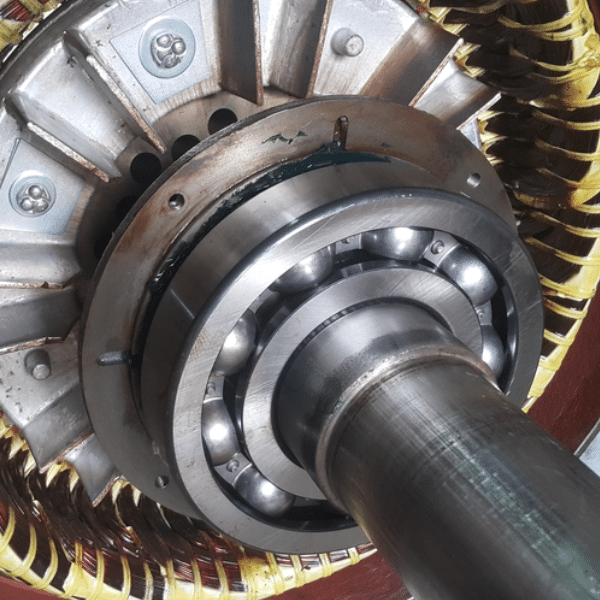
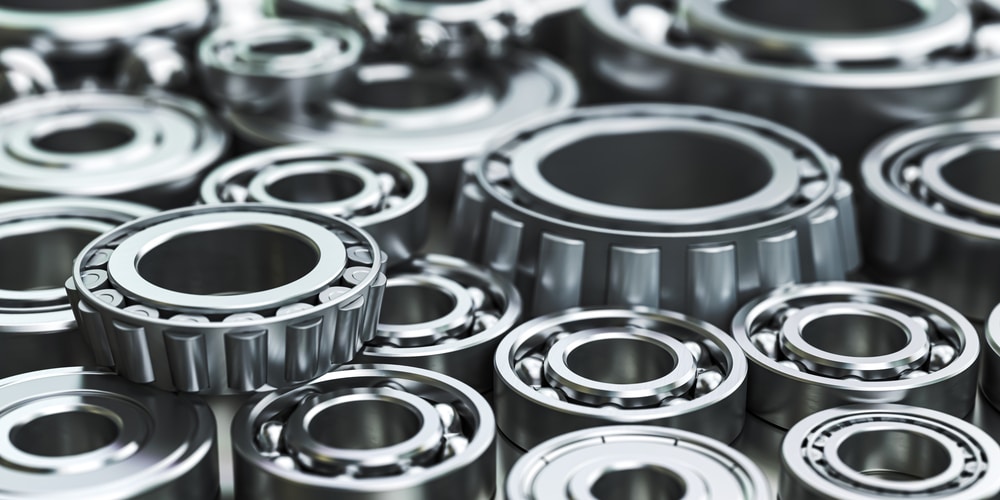
Knowing load type is key to bearing selection. Apart from angular contact ball bearings, radial loads might also be handled by cylindrical or needle roller bearings for high load-carrying capacities due to their line contact across rollers. For heavy axial loads, cylindrical roller bearings are perfect, but angular contact or thrust ball bearings can also be used. They transfer loads along the shaft axis to prevent misalignment. Tapered or spherical roller motor bearings are suitable when a motor experiences combined radial and axial loads. They distribute the load across the inner and outer raceways. For instance, a tapered roller bearing in an industrial gearbox might be designed to bear 70% radial and 30% axial load.
Speed
High-speed applications demand bearings with low friction and heat generation. Deep groove ball bearings can be ideal here. However, angular contact ball bearings also work well at high speeds thanks to their optimized geometry for combined loads. At lower speeds, sleeve or journal bearings perform under heavy radial loads with lower maintenance needs, including handling below 1,000-3,600 RPM in industrial equipment. Hybrid ceramic bearings with ceramic rolling elements are also appropriate for extreme speeds. They offer better durability and lower lubrication needs.
Environmental Conditions
Bearings must endure a range of environmental stresses. High-temperature conditions, including kiln motors, need motor bearings with polyurea-based grease that can tolerate up to 200°C. Sealed or shielded bearings in contamination-prone areas prevent dust, water, or particles from entering for a smooth operation. Anti-fretting is vital in vibration-heavy settings. Along these lines, in motorized conveyor systems, coated roller bearings resist fretting corrosion with a barrier against metal-on-metal wear. Hydrodynamic bearings are practical for systems exposed to water or aggressive contaminants for an additional shield.
Electrical Factors
High-voltage applications, like variable-speed motors, can result in stray currents causing electrical pitting. Insulated or ceramic hybrid bearings must be used for these cases. They block electrical paths within the bearing. For example, coated bearings resist up to 500 VDC for a barrier against electrical erosion. In wind turbines, ceramic hybrid bearings prevent pitting and dissipate heat under high loads. So, considered for all large motors above 100 kW, insulated motor bearings may extend bearing life while blocking harmful current paths.
Torque Requirements, Noise, and Vibration Control
Torque requirements affect bearing choice. For low-torque, high-precision applications, thin-section bearings maintain efficiency and decrease resistance. In noise-sensitive HVAC systems, deep groove ball bearings guarantee quiet operation at high speeds with lower dBA levels. Bearings with precision cage geometries, including angular contact bearings, cut vibration while stabilizing rolling elements. It is key to the accuracy of CNC spindles. With controlled noise and vibration, such bearings improve system accuracy and life.