Standard
Design
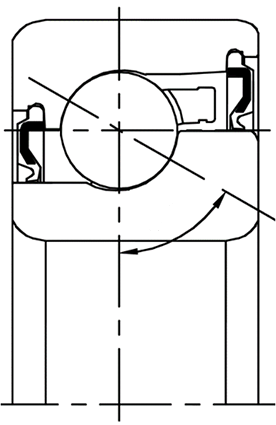
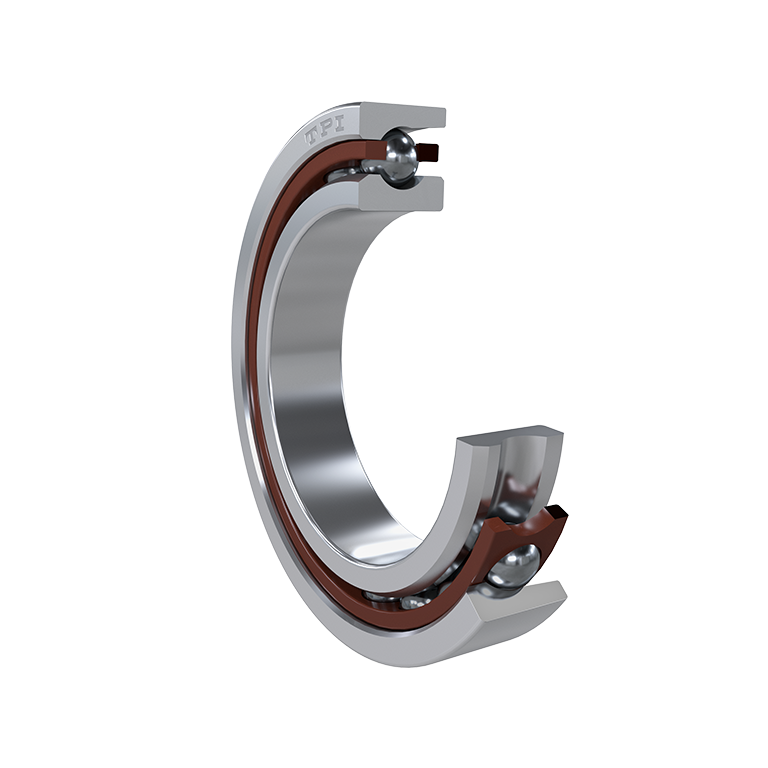
ACBB, which is the abbreviation of angular contact ball bearings. With different contact angles, the higher axial load can be well taken care now. TPI standard ball bearings are the perfect solution for high runout accuracy applications such as machine tool main spindles.
Inner and outer rings
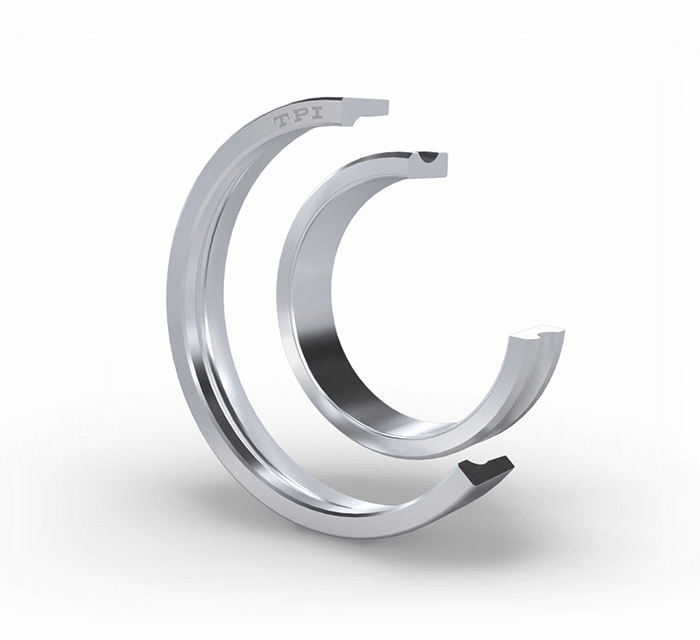
- Standard ball bearings steel with content of carbon and chromium was selected and hardended to withstand the intense pressure between the rolling element and bearing rings.
- Carbonitriding on both inner and outer rings is a basic hardening process for many TPI ball bearings suppliers. Through this special heat treatment, hardness on the raceway surface is increased; which reduces wear accordingly.
- Ultra-clean steel is available in some of TPI standard ball bearings’ product series now, higher wear-resistance is obtained accordingly. Since contact fatigue is often caused by hard non-metallic inclusions, bearings nowadays require exceptional levels of cleanliness.
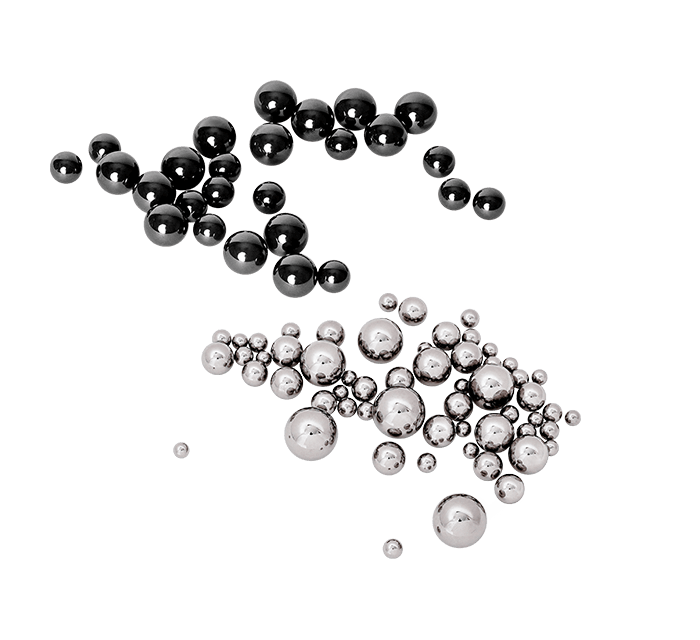
Rolling element
- High precision steel balls ensure TPI’s standard ball bearings have the best precision and stability. This also reflects in bearing performance under high speed rotation.
- Ceramic balls are an additional option when it comes to severe operating conditions. Extreme high speed rotation, heavy-duty applications and high heat generation while operating are some situations that ceramic balls that can definitely help.
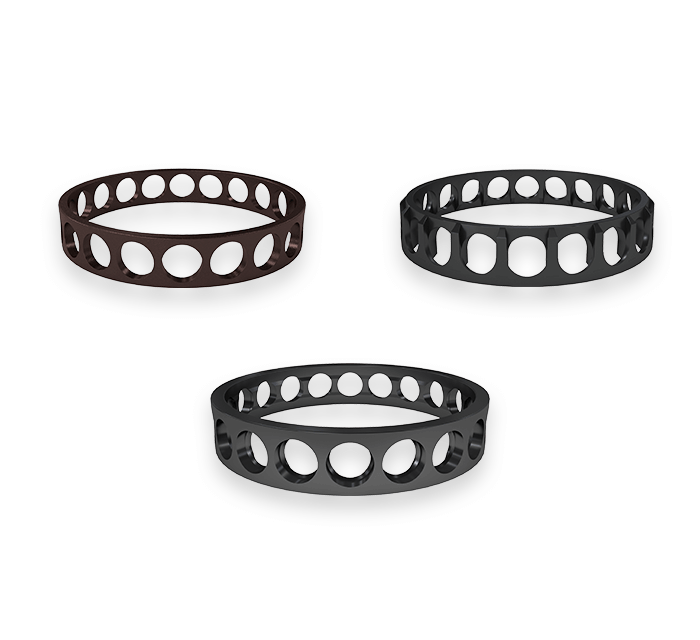
Cage
With the highly engineered arrangement of cages, remarkable characteristics were achieved.
- T1 cage, desinged for the requirement of high RPM and stable temperature rise.
- T2 cage, desinged for low noise level, however, the temperature rise in high RPM is relatively high.
- T3 cage, improvement of T2 cage, it’s not only applicable to high RPM operation but also remain low noise level under low RPM.
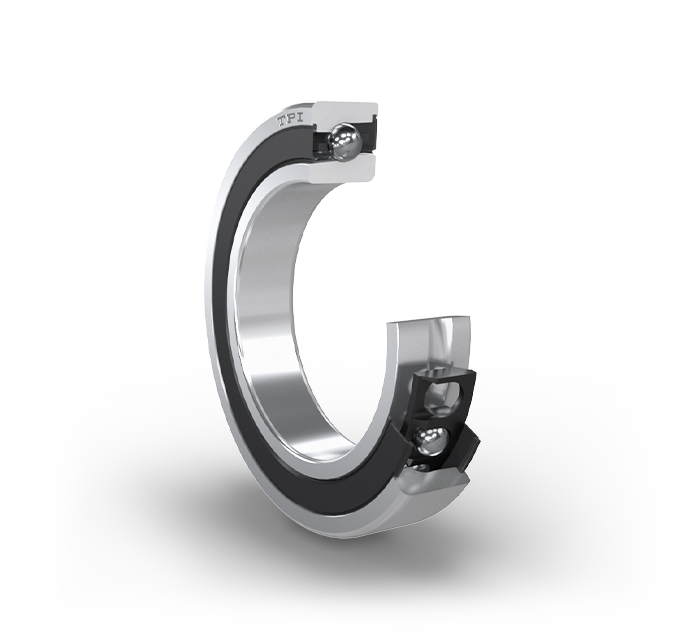
Seal
The non-contact seal was well designed by TPI roller bearing company to effectively reduce the external dust entering in standard ball bearings while rotating.
- Non-contact seal provides general protection for the bearings. It cannot prevent liquid contamination from getting into standard ball bearings. Torque and limiting speeds are the same as the open type.
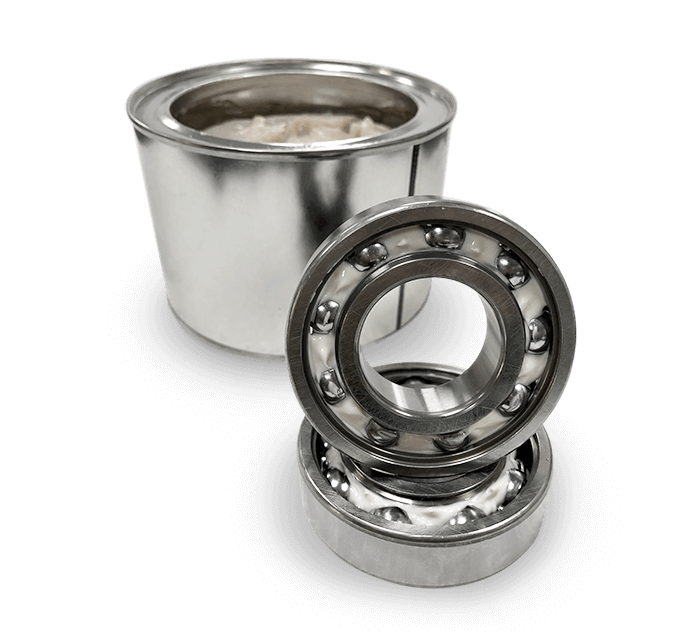
Grease
Selecting the most suitable grease for angular contact ball bearings requires experience and expertise. With years of experience cooperating with the best grease manufacturers, TPI is able to provide the perfect bearing with most suitable grease our customer.

Life
Bearing life is usually expressed as the number of hours an individual bearing will operate before material fatigue develops on either the raceways or the rolling element. The usual life rating for industrial applications is called “L10” life. The L10 life is the number of hours which that 90% of bearings will survive; or, conversely, 10% of bearings will have failed in the L10 number of service hours.

Preload / Rigidity
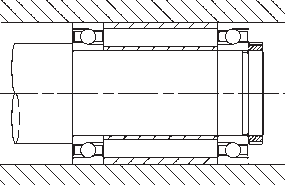
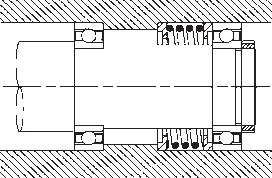
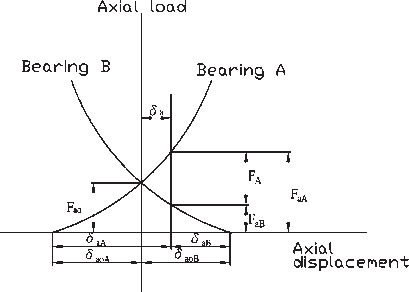
System rigidity, one of the main factors of productivity and accuracy when it comes to machine tools and other precision applications. By preloading the bearings, it becomes extremely rigid and the magnitude of elastic deformation becomes neglectable.
Arrangement
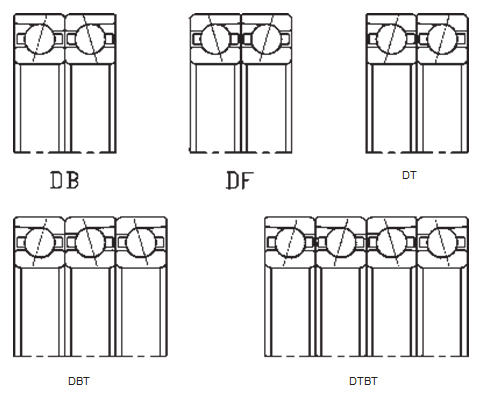
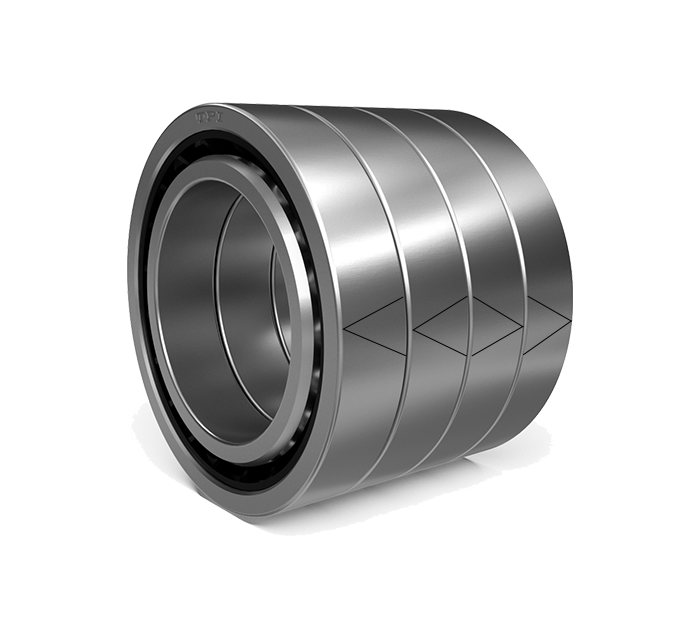
Standard ball bearings in duplex arrangements vary in combinations of two, three or four, in accordance to user’s required specifications.
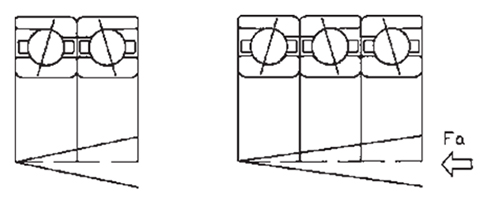
Back-to-back duplex (DB) arrangement and face-to-face duplex (DF) arrangement can both sustain radial and axial loads in both directions. The wider distance between the effective load centers of the DB arrangement allows larger moment loads to be handled.
Back-to-back duplex (DB) arrangement and face-to-face duplex (DF) arrangement can both sustain radial and axial loads in both directions. The wider distance between the effective load centers of the DB arrangement allows larger moment loads to be handled.
Designation
The designation indicates the form, size, precision, internal structure, etc. of the bearing, and it’s shown as below:
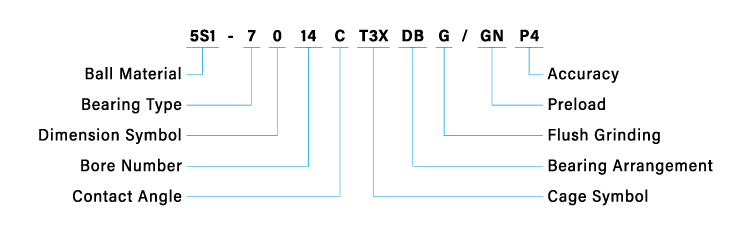
| Ball material | 5S1- | Si3N4 (Ceramic ball) |
| Blank | SUJ2 (Steel ball) | |
| Bearing type | 7 | Single-row angular contact ball bearing |
| HS | High speed angular contact ball bearing | |
| BT | High speed angular contact thrust ball bearing | |
| Diameter symbol | 9 | |
| 0 | ||
| 2 | ||
| 3 | ||
| Bore number | 6 – 26 | below number 03 00: 10mm 01: 12mm 02: 15mm 03: 17mm above number 04 bore number x5 mm |
| Contact angle | C | 15° |
| CE1 | 18° | |
| AD | 25° | |
| A | 30° | |
| B | 40° | |
| Cage symbol | T1 | Phenolic machined cage |
| T2 | Engineering plastic molded cage | |
| T3 | Engineering plastic molded cage | |
| Bearing arrangement | DB | Back to back arrangement |
| DF | Face to face arrangement | |
| DT | Tandem arrangement | |
| DBT | Tandem and back to back (triple-row) | |
| DTBT | Tandem and back to back (quad-row) | |
| Flush grinding | G | Flush ground type |
| Blank | Without flush ground | |
| Preload | GL | Light preload |
| GN | Normal preload | |
| GM | Medium preload | |
| GH | Heavy preload | |
| GXX | Special preload | |
| Accuracy | P5 | JIS standard class 5 |
| P4 | JIS standard class 4 | |
| P4X | JIS standard class 4, Special bore and outside diameter tolerance | |
| P42 | JIS standard class 4 (dimensional)、 JIS standard class 2 (running accuracy) | |
| P2 | JIS standard class 2 |